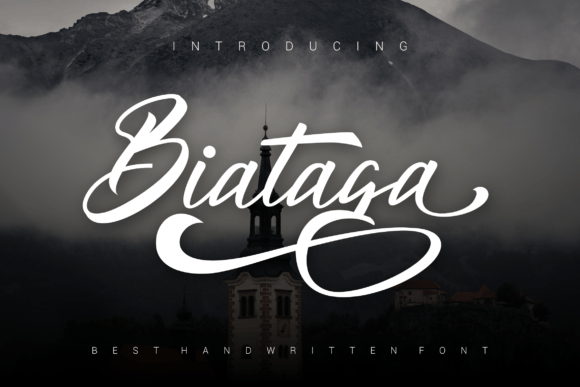
Biataga: A Sweet Handwritten Font for Crafters & Sellers
As a maker who designs printable wedding suites, hand-stamped tags, and Cricut-cut vinyl stickers for local boutiques, I’m always hunting for script fonts that balance charm with clarity—and Biataga is one of those rare finds. It’s not just another decorative handwritten font; it’s a sweet, cursive typeface with gentle curves, soft entry/exit strokes, and a natural rhythm that feels personal—not robotic. That warmth translates directly to your products: customers don’t just see text, they feel intention.
I’ve used Biataga on everything from soy candle labels (with “Lavender & Honey” arcing elegantly across matte kraft sticker stock) to rustic farmhouse welcome signs cut from birch plywood. Its flow works beautifully at medium to large sizes—think 24–60pt for wall art or acrylic invitations—but stays legible down to 14pt on printed planner inserts or boutique gift tags. For small-sticker applications (like 1” round tea bag seals or mini jar labels), I keep phrases short—“Hand-Poured,” “Small Batch,” or a single name—and avoid tight letter spacing. The font’s open counters and consistent stroke weight help it cut cleanly on Silhouette Cameo and Cricut Maker machines, especially when using the OTF version with standard vector outlines.
Biataga shines brightest where emotional resonance matters most: wedding stationery, baby shower invites, artisanal product packaging, and seasonal digital printables. I designed a set of printable Easter egg hunt clues last spring using Biataga for the clue headers (“Follow the Bunny’s Trail…”) paired with Montserrat Light for body text—and buyers specifically mentioned how “romantic yet readable” the combo felt. That’s the sweet spot: joyful, not fussy; romantic, not fragile.
It’s also ideal for branding consistency across physical + digital touchpoints. Use Biataga for your shop logo lockup, then echo it in Instagram story highlights (“New Arrivals,” “Custom Orders”), product hang tags, and downloadable templates—all while keeping your voice cohesive. Because Biataga leans gentle rather than dramatic, it avoids overwhelming delicate designs like botanical wedding menus or minimalist baby milestone cards.
For pairing, I almost always pair Biataga with a clean sans serif—think Poppins, Lato, or even Open Sans. Their neutral structure lets Biataga breathe without competing. On packaging, I’ll use Biataga for the product name (“Oat Milk Latte Blend”) and the sans for origin details, roast date, and ingredients. For formal stationery, a light serif like Cormorant Garamond adds quiet elegance beneath Biataga’s flourish. Avoid pairing it with other scripts or heavy display fonts—they’ll muddy the hierarchy and dilute its quiet confidence.
Before downloading, check what’s included: Biataga comes as a Script Amp font family with standard OpenType features—ligatures, stylistic alternates, and swashes are built in, so you can easily swap “&” for a more ornate ampersand or add a graceful terminal swash to the final “y” in “Joy.” These subtle details elevate handmade credibility. It supports Latin-based languages (English, Spanish, French, Portuguese), which covers most craft markets—but double-check if you serve bilingual communities or need extended diacritics.
File formats matter too. I use the OTF for Cricut Design Space and Silhouette Studio (it imports cleanly and retains hinting for sharp edges), and the TTF for Canva templates and quick mockups. If you’re creating SVG files for commercial use—say, layered cut files for Etsy SVG bundles—stick with the OTF and outline text before exporting to ensure compatibility across platforms.
Here’s what’s practical, not theoretical: Biataga isn’t meant for paragraphs. Don’t try to set a full recipe card or product description in it. It’s a display font, best reserved for headlines, names, short quotes, and decorative accents. That focus makes it incredibly reliable—you know exactly where it’ll land emotionally and functionally. When I tested it on matte-finish mug decals, the rounded terminals held up beautifully after dishwasher cycles; on cotton tote bags printed via DTG, the contrast between thick and thin strokes stayed crisp even at 300dpi.
Licensing is non-negotiable. As a seller, I only use Biataga under its commercial license—which covers physical products (stickers, mugs, apparel), digital downloads (printable planners, Canva templates), SVG bundles, client work, and social media graphics. It does not cover resale of the font file itself or embedding in web apps. Always verify the license terms before listing a template or launching a product line. One overlooked clause can cost more than the font’s price tag.
I keep Biataga in my go-to folder alongside two other trusted scripts—but it’s the one I reach for first when a client says, “Make it feel like it was written just for them.” Whether it’s a bride’s monogram on a linen napkin, a small-batch soap label with “Cold Process • Small Batch • Hand-Cut,” or a printable “Thank You” card for holiday orders, Biataga delivers sincerity without sacrificing polish. It doesn’t shout—it invites. And in a crowded handmade market, that quiet confidence is exactly what helps your products stand out, get remembered, and get chosen.
If you design for real people buying real things—not just aesthetics—Biataga earns its place in your toolkit. Not as decoration, but as a thoughtful, functional part of your brand’s voice.